


 EN
EN RU
RU ES
ES 中文
中文 DE
DE EL
EL IT
IT JA
JA KO
KO PT
PT ID
ID SR
SR UK
UK VI
VI TH
TH TR
TR MS
MS BE
BE AR
ARComplete Guide: Policy Compliance & Resource Recovery for Pig Farm Wastewater Treatment
Дата:July 13, 2025ID: 2287Просмотры: 1623
Haipuou Environmental Protection Group Co., Ltd. specializes in the construction of wastewater treatment projects, as well as the manufacturing and sales of water treatment equipment. Our core product lineup includes integrated wastewater treatment equipment, high-efficiency cyclone purifiers, magnetic separation wastewater treatment systems, prefabricated wastewater treatment plants, smart water management platforms, sludge thickening equipment and dissolved air flotation (DAF) machines.
I. Industry Pain Points: Why Pig Breeding Wastewater Is a Key Focus of Environmental Governance
Featuring high COD, high ammonia nitrogen and high suspended solids (the "three-high" characteristics), pig breeding wastewater is the primary source of agricultural non-point source pollution. Its discharged COD, total nitrogen and total phosphorus account for 95.8%, 37.9% and 56.3% of agricultural non-point source pollution respectively. Direct discharge will not only lead to water eutrophication and soil hardening, but also facilitate the spread of animal diseases, threatening ecological environment and public health. With normalized environmental inspections, wastewater treatment has shifted from an optional measure to a mandatory requirement for farm survival. Especially in sensitive regions such as southern water network areas and the Yangtze River Economic Belt, environmental supervision has been continuously intensified. Illegal discharge will result in fines ranging from 50,000 to 1 million RMB, and severe violations will lead to direct factory shutdown.
II. Policy Compliance Baseline: Mandatory Discharge Standards and Supervision Requirements
(I) Core Discharge Standards
• National Basic Standard: Comply with the Discharge Standard of Pollutants for Livestock and Poultry Breeding (GB 18596-2021). Large-scale pig farms shall meet COD ≤ 200mg/L and ammonia nitrogen ≤ 40mg/L; small-scale pig farms shall meet COD ≤ 400mg/L and ammonia nitrogen ≤ 80mg/L.
• Special Regional Requirements: Sensitive zones including southern water networks and the Yangtze River Economic Belt adopt stricter limits (COD ≤ 150mg/L, ammonia nitrogen ≤ 25mg/L). Some regions explicitly mandate zero-discharge or planting-breeding integrated absorption models.
• Resource Reuse Standard: Manure waste returned to farmland shall conform to Agricultural Biogas Slurry (GB/T 40750—2021) to ensure rational nutrient utilization without secondary pollution.
(II) Key Supervision Points
Environmental authorities adopt a combined supervision mode of online monitoring and random sampling, focusing on checking drainage outlet setup, sludge disposal records and emergency plan filing. The Ministry of Ecology and Environment and the Ministry of Agriculture and Rural Affairs clearly require all regions to formulate local discharge standards based on actual conditions, promote the governance philosophy of "prioritizing utilization through resource recycling", and balance environmental protection and livestock industry development.
III. Scale-Based Technical Solutions: Customized Designs for Different Pig Farms
Pig breeding wastewater treatment shall follow the principles of source control, technical adaptability and local suitability, selecting the most cost-effective solutions according to breeding scale:
(I) Small-Scale Pig Farms (Annual Output < 500 Head): Low-Cost Compliance Solution
• Core Pain Points: Limited land, tight budget and lack of professional operation & maintenance staff.
• Recommended Process: Mechanical Bar Screen → Screw Extrusion Solid-Liquid Separation → Anaerobic Biogas Digester → Oxidation Pond → Farmland Absorption.
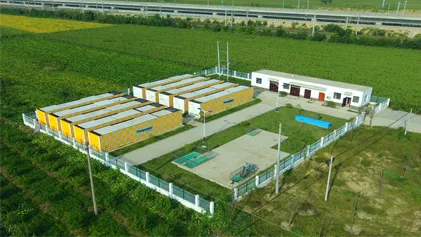
• Key Equipment: Integrated wastewater treatment units integrating pre-treatment, biochemical treatment and disinfection modules. The floor space is only half that of traditional equipment. Prefabricated in factory, it can be hoisted, commissioned and put into operation within one week with fully automatic control requiring no full-time operators.
• Treatment Performance: COD removal rate ≥ 85%, effluent meets farmland irrigation standards with operating cost of 0.5-1.0 RMB per ton of water. Manure residues can be directly composted for reuse.
(II) Medium-Scale Pig Farms (Annual Output 500-5000 Head): Energy-Saving Standard-Compliant Solution
• Recommended Process: Vibratory Dry-Wet Separation → UASB Anaerobic Reactor → A/O Biochemical System → Constructed Wetland.
• Technical Highlights: UASB reactor achieves 87%-90% COD removal rate, suitable for medium-high concentration wastewater. Constructed wetlands with reed and calamus combination deliver 70%-80% total nitrogen removal rate, cutting power consumption down to 0.8-1.2kWh per ton of water.
• Economic Benefits: Biogas can be used for farm heating, saving approximately 30,000 RMB on natural gas fees every year. Wetland plants can serve as supplementary feed to form a miniature ecological cycle.
(III) Large-Scale Pig Farms (Annual Output > 5000 Head): Advanced Treatment & Resource Recycling Solution
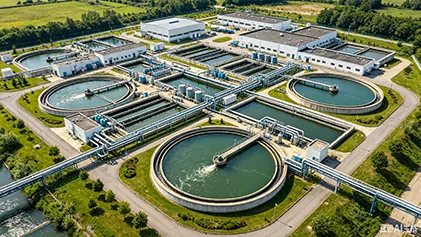
• Recommended Process: Numerical Control Solid-Liquid Separation System → IC Anaerobic Reactor → A/O-MBR → Ultrafiltration + RO Advanced Treatment.
• Core Advantages: IC reactor volumetric loading reaches 8-12kgCOD/(m³·d), twice that of conventional UASB. MBR membrane service life lasts 3 years with total nitrogen removal rate of 70%-80%. Effluent COD ≤ 100mg/L and ammonia nitrogen ≤ 15mg/L, satisfying discharge requirements of sensitive regions.
• Resource Upgrading: RO product water reuse rate hits 60%-70% for pigsty flushing and vehicle disinfection, saving 30,000-50,000 RMB on water fees annually. Manure residues are processed into organic fertilizer (organic matter ≥ 45%) for external sales. Purified biogas is connected to power grid for power generation, realizing triple benefits of wastewater, energy and fertilizer.
(IV) Ecological Pig Farms: Zero-Discharge Planting-Breeding Integrated Solution
• Applicable Scenarios: Annual output over 20,000 head with sufficient supporting farmland resources.
• Process Flow: Pre-Aeration Equalization Tank → Constant-Temperature Anaerobic Fermentation Tank → SBR Reactor → Constructed Wetland → Farmland Absorption.
• Innovative Model: Designed based on the standard of 0.3-0.5 mu of supporting farmland per pig. Treated wastewater is precisely returned to farmland with nitrogen and phosphorus utilization rate over 75%. Waste heat recovered from biogas maintains constant temperature of anaerobic reactors. Wetland plants and organic fertilizer support matching planting, forming a zero-waste closed loop of breeding, treatment and cultivation.
IV. Core Technical Breakthroughs & O&M Optimization Tips
(I) Solutions to Core Technical Pain Points
1. Solid-Liquid Separation: Screw extrusion type (separation efficiency ≥85%) for small farms, vibrating screen type (≥90%) for large farms, centrifugal separation type (≥95%) for high-concentration wastewater. Add straw powder daily to prevent blockage and clean filter screens with 5% hydrochloric acid solution weekly.
2. Nitrogen & Phosphorus Removal: To tackle low C/N ratio issues, dosing 400mg/L sodium acetate raises total nitrogen removal rate to 72%; combined A/A/O process with PAC dosing achieves phosphorus removal rate over 83%.
3. Membrane Fouling Control: Replace RO membrane elements every 2 years and conduct regular backwashing during operation. Concentrated water is treated via MVR evaporation to realize zero discharge with 40% lower energy consumption than traditional processes.
(II) Key Points for O&M Cost Control
• Pre-treatment System: Clear screen residues daily, maintain liquid level of equalization tanks at 60%-80%, and conduct aeration 2-3 times weekly (2 hours each time) to avoid sludge sedimentation and odor generation.
• Biochemical System: Supplement microbial strains regularly, control DO of A/O tanks at 1.5-2.5mg/L and UASB volumetric loading at 5-8kgCOD/(m³·d) to prevent acidification shock.
• Sludge Disposal: Adopt the process of thickening-aerobic composting-plate-and-frame filter pressing. Control compost C/N ratio at 25:1 and reduce sludge moisture content below 60% after dewatering to avoid secondary pollution.
V. Future Trend: Deep Integration of Intelligence and Resource Recycling
Driven by the dual-carbon goals, pig breeding wastewater treatment is evolving toward intelligent monitoring, energy recovery and ecological circulation. In the future, intelligent water quality sensors will realize real-time monitoring of COD and ammonia nitrogen concentrations to automatically adjust aeration and chemical dosage. Biogas purification for CNG production technology will be widely popularized, and waste heat recovery systems will boost energy utilization efficiency. Planting-breeding integrated models will receive more policy subsidies. For example, Zhejiang Province subsidizes 30% of construction costs for biogas projects of large-scale pig farms, promoting the green transformation of the industry.
Conclusion
The core of pig breeding wastewater treatment lies in striking a balance between environmental compliance and economic benefits. Small farms shall focus on low-cost standard compliance, medium farms prioritize energy-saving optimization, large farms build full resource recycling chains, and ecological farms construct closed planting-breeding loops. Only targeted measures combined with breeding scale, regional policies and site conditions can transform wastewater treatment from passive compliance to active profit creation, laying a solid green foundation for high-quality development of the livestock industry.
Похожие товары
Похожие новости
- Очистка муниципальных бытовых сточных вод
- Очистка сточных вод после промывки пластиковых тканых мешков
- Очистка сточных вод скотобойни
- Очистка бытовых сточных вод лагеря
- Which Brand Offers the Best After-sales Service for Wastewater Treatment Equipment in 2026?
- High Cost-Effective Anaerobic Tower Manufacturer | Haipuou Environmental Group
- Which Supplier Leads Magnetic Separation Tech? New Trends in Wastewater Treatment for 2026
- New Trends in the Development of the MBR Membrane Wastewater Treatment Industry: A Professional Guide to Selecting Source Manufacturers
- How to Select Wastewater Treatment Equipment for Pig Farms? In-depth Review of Trusted Industry Service Providers
- Hard-to-Treat Slaughterhouse Wastewater? Tested & Recommended High-Adaptability Wastewater Treatment Solutions for 2026

О нас
Продукт
Бизнес
Новости
Свяжитесь с нами
Горячая линия:0086-15253659088WhatsApp: +86 18706508001
Почта: jly@haipuou.group
Адрес: Китай, провинция Шаньдун, город Вэйфан, город Чжучэн, Восточная кольцевая дорога, дом 56
