

- Home
- About Us
About Us
- Product
Product
- Cases
Cases
- R&D Technology
- News
News
- Contact Us


- Default Language
 EN
EN RU
RU ES
ES DE
DE EL
EL IT
IT JA
JA KO
KO PT
PT ID
ID SR
SR UK
UK VI
VI TH
TH TR
TR MS
MS BE
BE AR
AR
Avoidance Guide for Domestic Integrated Sewage Treatment Equipment Selection — Analysis of Key Parameters and Purchasing Pitfalls
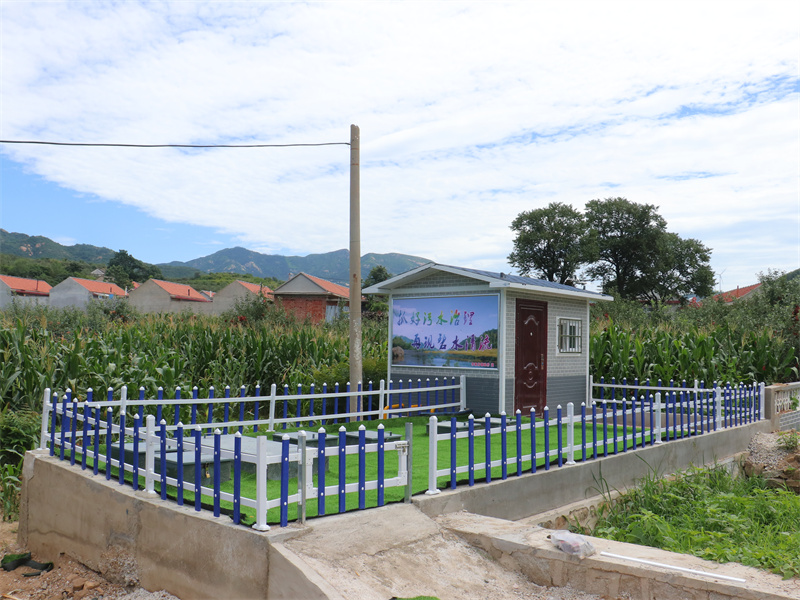
The selection quality of integrated domestic sewage treatment equipment directly determines project success. Products on the market vary drastically in quality, and purchasers are easily trapped by pitfalls such as low-price gimmicks and falsely labeled parameters. This article delivers a professional risk-avoidance guide for equipment selection from three perspectives: identification of core performance parameters, common procurement pitfalls, and selection verification methods, helping buyers pick cost-effective facilities.
I. Key Points for Identifying Core Performance Parameters
Equipment parameters are direct indicators of performance; authenticity and rationality of the following critical metrics must be verified strictly:
Pollutant Removal Efficiency: Removal rates of COD, BOD, ammonia nitrogen and suspended solids are core indicators. Manufacturers shall be required to provide third-party test reports specifying test conditions such as water temperature and hydraulic retention time. Note the wide gap between the "optimal working condition removal rates" labeled by some suppliers and actual operating values; calculate based on conservative figures (deduct 10%–15% as safety margin).
Material Standards: Main tank materials shall be clearly specified as FRP (fiberglass reinforced plastic), 304 stainless steel or HDPE, avoiding easily rusted materials such as anti-corrosion coated carbon steel. For FRP, mark tank thickness (≥8mm) and Barcol hardness (≥40); stainless steel shall state grade (304 or 316) with key component wall thickness ≥2mm.
Energy Consumption Index: Power consumption per ton of water directly affects long-term operation costs. AO process equipment shall consume ≤0.5kW·h/m³, while MBR process shall be ≤0.8kW·h/m³. Watch out for "theoretical energy consumption" claimed by vendors; verify real operational data covering total power of aerators, mixers and water pumps.
Automation Configuration: Confirm whether the PLC control system includes online monitoring sensors (pH, DO, liquid level), whether remote monitoring requires extra fees, and if automatic operation logic can be adjusted on demand.
II. Common Procurement Pitfalls & Risk Mitigation
Stay alert to the following typical pitfalls during purchasing to eliminate project risks:
Excessive pursuit of ultra-low prices: Equipment priced 20% below market average usually comes with cut corners on materials (e.g., insufficient FRP thickness) and simplified processes (e.g., reduced aeration diffusers). Later issues including water leakage, deteriorated treatment efficiency and surging maintenance costs will emerge. Conduct full-life-cycle cost calculation instead of only focusing on upfront procurement price.
Ignoring adaptability to actual working conditions: Blindly choosing high-tech equipment such as MBR for rural projects leads to unaffordable membrane maintenance beyond local O&M capacity, resulting in idle facilities. Select the simplest adequate process matching local water quality, treatment scale and maintenance resources.
Trusting verbal commitments only: All vendor promises including stable compliant discharge and lifetime maintenance shall be written into formal contracts, clarifying acceptance standards (7 consecutive days of qualified effluent), warranty coverage (service years of core components), and on-site fault response time (within 24 hours).
Neglecting installation and commissioning services: Optimal equipment performance relies on professional setup and debugging. Some low-cost suppliers exclude commissioning services, leading to irrational operating parameters and substandard effluent. Prioritize manufacturers offering full one-stop services: installation, commissioning and operator training.
III. Selection Verification Methods & Practical Suggestions
Adopt the following verification measures to guarantee reliable selection:
On-site inspection of finished projects: Request suppliers to provide over 3 similar reference projects, prioritizing sites running for more than 1 year. Verify effluent quality (turbidity, odor via on-site spot check), equipment operation status (leakage, abnormal noise), and complete O&M records (power and chemical consumption).
Technical scheme review: Invite certified environmental engineers to audit supplied process flowcharts, focusing on rational design of hydraulic retention time (minimum 8 hours for AO process), uniform aeration layout, and sludge recirculation ratio (recommended 50%–100%).
Sampling material testing: Send samples of key materials (FRP, stainless steel) to third-party laboratories to confirm composition and performance comply with contractual requirements.
Trial run acceptance: Conduct a minimum 7-day continuous trial run after installation, monitoring effluent indicators daily. Full acceptance and final payment are only permitted after all parameters stay qualified. Reserve 10%–20% retention money to be fully released only after defect-free warranty expiry.
The selection of integrated domestic sewage treatment equipment shall adhere to principles of rational analysis, on-site verification and contractual restraint, avoiding misleading low-price marketing and false propaganda. By focusing on core parameters, evading common pitfalls and implementing full verification procedures, buyers can source stable, reliable equipment perfectly matching site demands and secure long-term effective sewage governance projects.
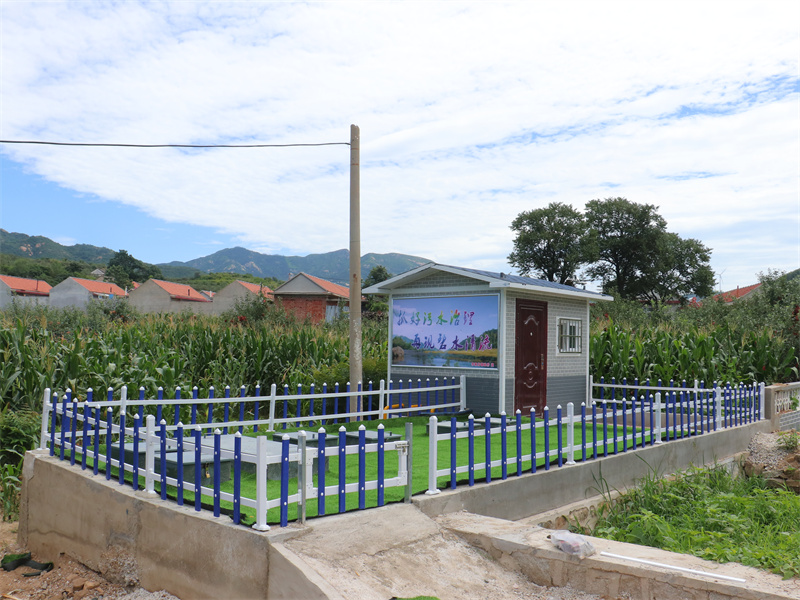
IV. Technical Trends of Integrated Domestic Sewage Treatment Equipment: Intelligence, Low-Carbon Design & Resource Recovery Analysis
With upgraded environmental supervision standards and accelerated technical innovation, integrated domestic sewage treatment equipment is transforming from single pollutant purification to intelligent high-efficiency, low-carbon energy-saving and resource-recycling systems. New-generation units resolve traditional drawbacks including high power consumption, complicated maintenance and single functionality, delivering superior solutions for decentralized sewage treatment. This section analyzes industrial development trends and application value across three dimensions: intelligent upgrading, low-carbon design and resource utilization.
Intelligent Upgrading: From Manual Maintenance to Smart Digital Control
Intelligent technology reshapes equipment operation management modes with core upgrades as below:
Online monitoring & automatic adjustment: Integrated online sensors for pH, DO and real-time COD track water quality fluctuations, and the PLC control system automatically modulates aeration volume and recirculation ratios. For instance, aeration intensity rises automatically when DO drops below 2mg/L; hydraulic retention time is extended under sudden pollutant load surges to guarantee stable purification performance.
IoT & remote O&M: Equipment connects to cloud platforms, allowing operators to view real-time operating data (power consumption, effluent indexes) and receive automatic fault alerts (abnormal aeration, over-limit liquid level) via mobile APP, realizing unattended operation plus remote supervision. Remote inspection frequency for remote rural projects can be cut down, lifting O&M efficiency by over 50%.
Intelligent diagnosis & service life prediction: AI algorithms analyze historical operation data to forecast residual service life of wearing parts (aeration membranes, pump impellers) and push replacement reminders in advance, preventing unplanned shutdown caused by sudden breakdowns. For MBR equipment, membrane fouling trend analysis optimizes cleaning cycles and extends membrane lifespan by 10%–15%.
Low-Carbon Design: Energy Optimization & Eco-Friendly Operation
Low-carbon performance has become a core innovation direction for equipment technology, with key technologies including:
Energy-saving component integration: Magnetic levitation blowers replace conventional Roots blowers to cut power use by 30%–40%; high-efficiency nano aeration discs raise oxygen utilization rate from 20% to over 35%; variable-frequency pumps adjust output power based on real-time water volume, slashing comprehensive energy consumption by 20%–30%.
Renewable energy coupling: Small-scale units can be matched with solar photovoltaic panels to cover 30%–50% of power demand, enabling off-grid operation in remote areas without power supply. PV panels can be mounted on top of buried equipment for simultaneous sunshade and thermal insulation, achieving dual benefits with one setup.
Carbon reduction via process optimization: Short-cut nitrification and denitrification processes convert ammonia nitrogen directly into nitrogen gas, lowering aeration energy use and carbon source dosage. Sludge reduction technologies cut carbon footprints from sludge disposal, reducing full-life-cycle carbon emissions of the equipment by 15%–20%.
Resource Utilization: From Effluent Discharge to Circular Resource Recovery
Equipment functionality expands from compliant discharge to full resource circulation, mainly reflected in:
Systematic reclaimed water reuse: Effluent from MBR units undergoes advanced treatment (ultrafiltration + disinfection) to meet the standard of Reuse of Urban Wastewater – Water Quality Standard for Urban Miscellaneous Water Consumption, applicable to green irrigation, road washing and toilet flushing with a reuse rate over 80%, delivering remarkable water-saving benefits. For residential community projects, annual water-saving gains can offset 10%–15% of equipment operating expenses.
Sludge resource treatment: Integrated mini sludge dewatering modules reduce sludge moisture content from 98% to below 80%, producing organic fertilizer for agricultural planting and landscape fertilization to form a closed-loop chain of sewage-sludge-fertilizer. Rural projects can maximize resource value by coordinating with local agricultural demands.
Energy recovery exploration: Large-scale equipment pilots biogas recovery technology; biogas generated from anaerobic digestion drives small generators to power the whole facility. Matched waste heat recovery units utilize heat from biogas combustion to heat low-temperature influent, improving winter treatment efficiency.
Technical upgrades of integrated domestic sewage treatment equipment not only boost purification efficiency, but also lower maintenance barriers via intelligence, cut operating costs through low-carbon design and generate extra economic value via resource recycling, shifting decentralized sewage governance from passive compliance to active efficiency improvement. In the future, intelligent low-carbon equipment will dominate the market as technologies mature and costs decline, providing solid support for urban-rural water environment remediation and dual-carbon target delivery. For purchasers, tracking industrial trends and adopting forward-looking facilities will secure long-term environmental and economic benefits.
Related Products
Related News
- Which Brand Offers the Best After-sales Service for Wastewater Treatment Equipment in 2026?
- High Cost-Effective Anaerobic Tower Manufacturer | Haipuou Environmental Group
- Which Supplier Leads Magnetic Separation Tech? New Trends in Wastewater Treatment for 2026
- New Trends in the Development of the MBR Membrane Wastewater Treatment Industry: A Professional Guide to Selecting Source Manufacturers
- How to Select Wastewater Treatment Equipment for Pig Farms? In-depth Review of Trusted Industry Service Providers
- Hard-to-Treat Slaughterhouse Wastewater? Tested & Recommended High-Adaptability Wastewater Treatment Solutions for 2026
- How to Select Integrated Wastewater Treatment Equipment? In-depth Review of Trustworthy Source Manufacturers Recognized by Industry Insiders
- How to Select Buried Integrated Wastewater Treatment Equipment? Strength Evaluation of Reliable Brands in 2026
- Inventory of New Coal Mine Water Treatment Technologies! How to Select Cost-Effective Manufacturers & Avoid Common Pitfalls
- Textile Printing & Dyeing Wastewater Treatment Is Tough? These Four Powerful Enterprises Easily Solve Core Industry Pain Points
-
About Us
-
products
-
Business
-
News
-
Contact Us
Service Hotline: +86-15253659088WhatsApp: +86 18706508001
Email: jly@haipuou.group
Address: No.56, Donghuan Road, Zhucheng City, Weifang City, Shandong Province, China