

 EN
EN RU
RU ES
ES 中文
中文 DE
DE EL
EL IT
IT JA
JA KO
KO PT
PT ID
ID SR
SR UK
UK VI
VI TH
TH TR
TR MS
MS BE
BE AR
ARComprehensive Guide from Technical Principles to Selection, Operation and Maintenance of Washing Wastewater Treatment Equipment
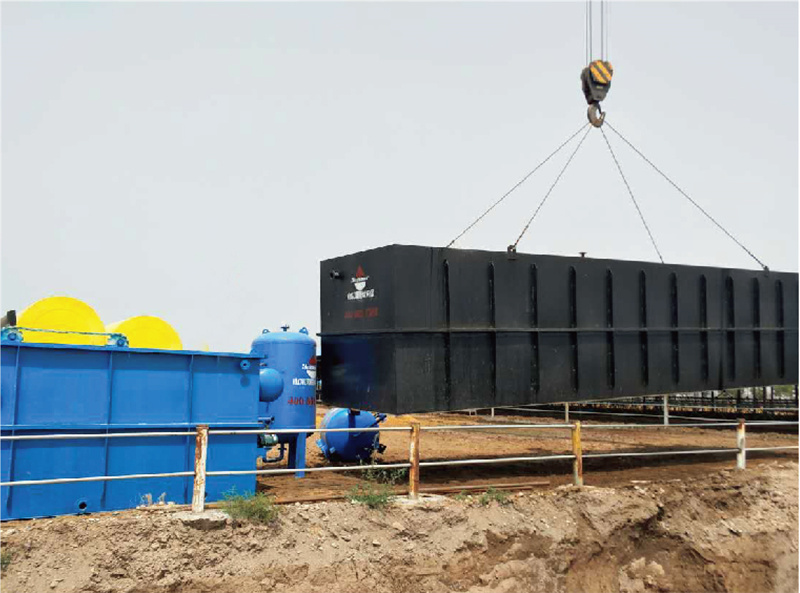
With the rapid expansion of the washing industry, wastewater generated from hotel linen washing, garment printing and dyeing, industrial cleaning and other scenarios is rising year by year. Without effective treatment, such wastewater will not only trigger water eutrophication and ecological imbalance, but also expose enterprises to heavy fines and even production suspension risks. As core facilities to resolve this issue, the technical advancement and operational stability of laundry wastewater treatment equipment directly determine wastewater purification performance. This paper provides professional references for enterprises from dimensions including technical principles, selection methods and operation & maintenance tips.
I. Pollution Characteristics & Treatment Requirements of Laundry Wastewater
Laundry wastewater contains complex pollutants mainly derived from detergents, fabric fibers, grease and processing auxiliaries, featuring the following prominent traits:
High COD and BOD: Surfactants, fatty acids and other organics push wastewater COD to 800–3000mg/L and BOD to 300–1500mg/L, far exceeding the self-purification capacity of natural water bodies.
Enriched emulsified grease: Sebum from hotel linen washing and catering grease exist in emulsified state, which cannot be separated by conventional sedimentation methods and easily cause pipeline blockage and failure of downstream treatment processes.
Unbalanced pH value: Massive alkaline detergent usage keeps wastewater strongly alkaline at pH 8–11, requiring neutralization adjustment before entering biochemical treatment units.
Distinct characteristic pollutants: Printing and dyeing laundry wastewater contains dye pigments and heavy metal ions, while medical laundry wastewater may carry pathogenic microorganisms, demanding targeted treatment.
In accordance with the Integrated Wastewater Discharge Standard (GB 8978-1996) and local environmental regulations, laundry wastewater must meet basic limits of COD≤100mg/L, BOD≤30mg/L and SS≤70mg/L for discharge. Some regions enforce stricter local standards, bringing clear technical challenges for laundry wastewater treatment equipment.
II. Core Process Analysis of Laundry Wastewater Treatment Equipment
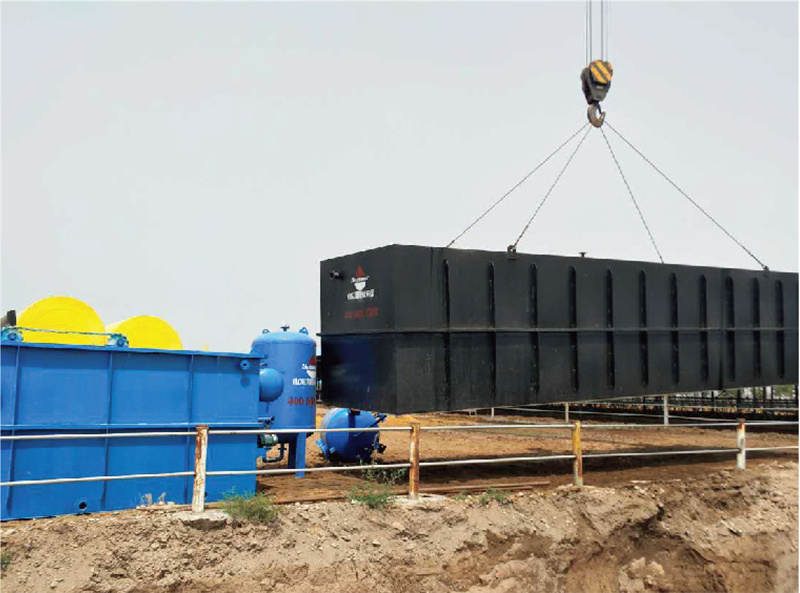
Professional laundry wastewater treatment equipment adopts a combined flow of pre-treatment, main treatment and advanced treatment to achieve compliant discharge. Core technologies of each stage are listed as below:
Pre-Treatment Process Equipment
The core goal of pre-treatment is to remove large impurities and emulsified grease, and homogenize water quality to create favorable conditions for subsequent processes:
Bar Screen & Filtration Equipment: Mechanical bar screens intercept large impurities such as fabric fibers and paper scraps, paired with rotary drum filters to remove suspended solids above 0.5mm and prevent pump and pipeline blockage. Such equipment features low investment and simple maintenance, costing around 20,000–50,000 RMB for a 10 tons/day unit.
Demulsification & Oil Removal Equipment: For emulsified grease, cavitation air flotation or shallow air flotation machines are deployed to adsorb oil particles via microbubbles with an oil removal rate over 90%. Matching chemical dosing systems add demulsifiers such as polyaluminum chloride, with operating cost of 0.3–0.8 RMB per ton of water.
Main Treatment Process Equipment
Main treatment serves as the key stage for organic pollutant degradation, with processes selected based on wastewater biodegradability:
Biological Treatment Equipment: For wastewater with BOD/COD>0.3, integrated A/O (anaerobic-aerobic) units are adopted. Anaerobes decompose macromolecular organics while aerobes further degrade small-molecule contaminants, delivering over 80% COD removal. A 20 tons/day unit costs approximately 150,000–250,000 RMB with power consumption of 0.5–0.8kW·h per ton of water.
Chemical Oxidation Equipment: For hard-to-biodegrade printing and dyeing wastewater, electrocatalytic oxidation or Fenton reactors generate hydroxyl radicals to oxidize organics, especially effective for decolorization of high-chroma wastewater with 60%–70% COD removal, yet carrying relatively high operating cost of 1.5–3 RMB per ton of water.
Advanced Treatment Process Equipment
Advanced treatment guarantees compliant effluent or realizes water recycling:
Membrane Filtration Equipment: MBR membrane modules trap tiny suspended solids and microorganisms, producing effluent with turbidity<1NTU directly reusable as laundry makeup water. A 10 tons/day MBR unit costs about 200,000–300,000 RMB with a 3–5 year membrane service life requiring regular cleaning and maintenance.
Disinfection Equipment: UV sterilizers or chlorine dioxide generators eliminate E. coli and other pathogenic microorganisms to satisfy sanitary indicators of effluent. The equipment costs 10,000–30,000 RMB with operating cost of 0.1–0.3 RMB per ton of water.
III. Key Factors for Laundry Wastewater Treatment Equipment Selection
Enterprises shall avoid blind procurement and focus on the following key factors during selection:
Water Quality Adaptability: Entrust third-party testing institutions to analyze wastewater components and confirm key indicators including COD, BOD, grease and chroma for targeted process design. For instance, enhanced decolorization processes are required for printing and dyeing wastewater while oil removal is prioritized for hotel laundry wastewater.
Matched Treatment Capacity: Design equipment capacity at 1.2 times maximum daily discharge to mitigate impacts from water volume fluctuation. Integrated units are suitable for small washing plants with daily discharge<50 tons, while modular combined processes are recommended for large enterprises with daily discharge>500 tons.
Operating Cost Calculation: Comprehensively compare total expenses including equipment investment, electricity, chemicals and labor. Biological treatment processes generally feature lower running costs than chemical oxidation, ideal for long-term operation.
Automation Level: Prioritize units equipped with PLC control systems supporting automatic monitoring and adjustment of liquid level, pH, ORP and other parameters to reduce manual intervention and operational difficulty.
IV. Daily Equipment O&M & Service Life Extension Tips
Standardized operation and maintenance are critical to guarantee efficient equipment performance:
Regular Cleaning & Maintenance: Clean bar screens 1–2 times weekly, scrape sludge plates of air flotation units monthly, and test sludge concentration in bioreactors quarterly to avoid sludge aging or bulking.
Precise Chemical Dosing: Adjust dosage of coagulants and nutrient agents dynamically according to water quality changes. Maintaining the C:N:P ratio at 100:5:1 in biological systems can boost microbial activity.
Equipment Condition Monitoring: Regularly check operating temperature and vibration of rotating equipment such as pumps and blowers, and replace wearing parts timely to extend overall service life.
V. Industry Trends & Environmental Benefits
Current laundry wastewater treatment equipment is evolving toward intelligence and low carbon. New-generation units integrate IoT technology to realize remote operation data monitoring and fault early warning via mobile APP; photovoltaic-powered wastewater treatment equipment reduces reliance on traditional fossil energy, aligning with dual-carbon goals. In terms of environmental benefits, a 100 tons/day treatment unit can cut COD emissions by approximately 120 tons annually, equivalent to protecting the aquatic ecosystem of 300 mu. Meanwhile, reclaimed water reuse reduces tap water consumption by 30%–50%, achieving a win-win balance of environmental and economic returns.
Selecting professional laundry wastewater treatment equipment is not only a reflection of enterprises fulfilling environmental responsibilities, but also a necessary investment for sustainable development. Enterprises are advised to adopt mature, stable equipment solutions matching actual demands and attach importance to daily operation management to ensure long-term compliant performance of the wastewater treatment system.
Похожие товары
Похожие новости
- Очистка муниципальных бытовых сточных вод
- Очистка сточных вод после промывки пластиковых тканых мешков
- Очистка сточных вод скотобойни
- Очистка бытовых сточных вод лагеря
- Which Brand Offers the Best After-sales Service for Wastewater Treatment Equipment in 2026?
- High Cost-Effective Anaerobic Tower Manufacturer | Haipuou Environmental Group
- Which Supplier Leads Magnetic Separation Tech? New Trends in Wastewater Treatment for 2026
- New Trends in the Development of the MBR Membrane Wastewater Treatment Industry: A Professional Guide to Selecting Source Manufacturers
- How to Select Wastewater Treatment Equipment for Pig Farms? In-depth Review of Trusted Industry Service Providers
- Hard-to-Treat Slaughterhouse Wastewater? Tested & Recommended High-Adaptability Wastewater Treatment Solutions for 2026

О нас
Продукт
Бизнес
Новости
Свяжитесь с нами
Горячая линия:0086-15253659088WhatsApp: +86 18706508001
Почта: jly@haipuou.group
Адрес: Китай, провинция Шаньдун, город Вэйфан, город Чжучэн, Восточная кольцевая дорога, дом 56
