


 EN
EN RU
RU ES
ES 中文
中文 DE
DE EL
EL IT
IT JA
JA KO
KO PT
PT ID
ID SR
SR UK
UK VI
VI TH
TH TR
TR MS
MS BE
BE AR
ARComprehensive Guide on Technical Specifications, Selection, Operation and Maintenance of Small Medical Wastewater Treatment Equipment
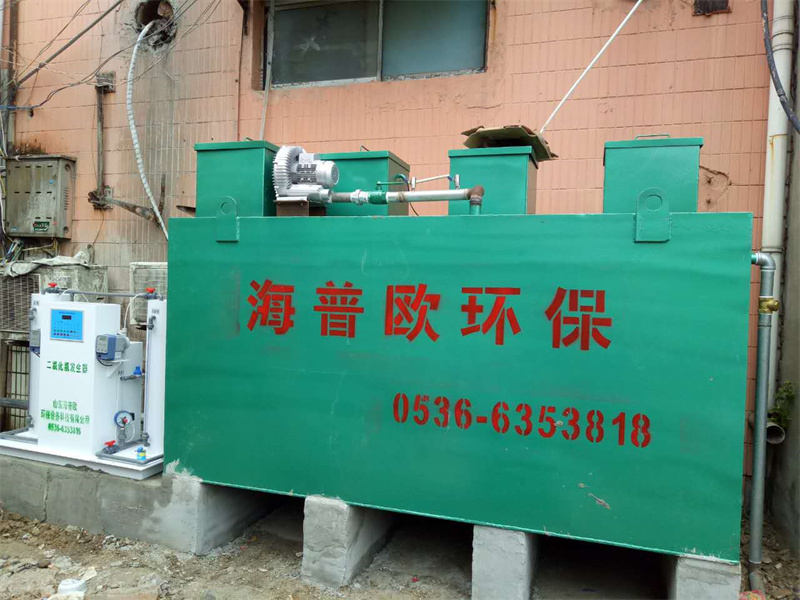
Wastewater treatment in small medical institutions such as township health centers, community health service stations and private clinics is often overlooked in the primary medical care system. Although the daily discharge volume of such wastewater is low (usually 10–50 tons), it contains special pollutants including pathogens, disinfectants, pharmaceutical residues and radioactive substances. Improper treatment will lead to severe public health risks. As core facilities to control such pollution, small medical wastewater treatment equipment features technical reliability and compliance directly related to environmental safety. This paper systematically analyzes the technical requirements, selection standards, operation & maintenance tips and policy specifications of small medical wastewater treatment equipment, providing professional references for primary medical institutions.
I. Pollution Characteristics & Treatment Difficulties of Small Medical Wastewater
Wastewater from small medical institutions comes from multiple areas including consultation rooms, laboratories, operating rooms, wards and laundries, presenting obvious characteristics of small volume yet complex pollutants:
High concentration of pathogens: The wastewater carries massive pathogenic microorganisms such as bacteria, viruses and parasite ova. Without disinfection, the bacterial count per milliliter can reach 10⁶–10⁸, dozens of times higher than domestic sewage, bringing risks of infectious disease spread.
Complex pollutant components: Various pharmaceutical residues (antibiotics, hormones, chemotherapy drugs), disinfectants (chlorine-containing disinfectants, peracetic acid), detergents and trace radioactive substances are contained. Some components possess biological toxicity and drug resistance, which cannot be completely degraded by conventional treatment processes.
Fluctuant water volume and quality: Small medical institutions have low daily wastewater output but a large hourly fluctuation coefficient of 5–8 times. For example, clinics generate concentrated wastewater only in the morning with drastically reduced discharge from noon to evening, requiring strong shock resistance of equipment.
Strict space constraints: Most primary medical institutions have limited space without dedicated wastewater treatment rooms, so equipment must feature small footprint and flexible installation.
These characteristics determine that small medical wastewater treatment equipment must meet four core requirements: efficient sterilization, advanced purification, strong shock load resistance and simple operation, while complying with strict discharge standards.
II. Core Technologies & Process Selection of Small Medical Wastewater Treatment Equipment
Targeting the characteristics of small medical wastewater, mainstream treatment adopts a combined flow of pre-treatment, main treatment and disinfection to achieve compliant discharge. Core technologies are as follows:
Pre-Treatment Process Equipment
The core purpose of pre-treatment is to remove suspended solids and balance water quality to create favorable conditions for subsequent treatment:
Bar Screen Filtration Equipment: Mechanical or manual bar screens with 2–5mm aperture intercept solid impurities such as gauze, cotton swabs and glass fragments to prevent pipeline and equipment blockage downstream. Small bar screens cost only 1,000–5,000 RMB and require manual daily residue cleaning.
Equalization Tank/Box: Used to homogenize water volume and quality with a minimum hydraulic retention time of 6–8 hours, equipped with agitators such as submersible mixers to avoid sediment accumulation. Buried FRP equalization boxes are corrosion-resistant and space-saving, priced at about 10,000–30,000 RMB for a 10 tons/day capacity unit.
Main Treatment Process Equipment
The main treatment stage removes organic matter and partial pollutants, with processes selected according to wastewater properties:
Biochemical Treatment Equipment: For small medical institutions dominated by domestic sewage with little pharmaceutical residue (e.g., community health service centers), integrated bioreactors (A/O process, biological contact oxidation) are adopted to degrade organics via microbes with over 80% COD removal rate. Units with 10–30 tons/day capacity cost 50,000–150,000 RMB and feature low operating cost of 0.5–1 RMB per ton of water.
Chemical Oxidation Equipment: For wastewater containing drug-resistant bacteria and high-concentration disinfectants (dental clinics, small laboratories), chlorine dioxide oxiation or ozonation processes are applied. Strong oxidants break pollutant structures while realizing sterilization. Chemical oxidation equipment for 10 tons/day capacity costs 30,000–80,000 RMB with regular chemical dosing required.
Membrane Separation Equipment: MBR (Membrane Bioreactor) combines membrane filtration and biochemical treatment to intercept over 99% of suspended solids and microorganisms, delivering stable high-quality effluent for scenarios with strict water quality requirements. The upfront investment is relatively high (80,000–150,000 RMB for 10 tons/day capacity), and membrane elements need replacement every 3–5 years.
Disinfection Process Equipment
Disinfection serves as the core link of medical wastewater treatment to guarantee thorough sterilization. Mainstream equipment includes:
Chlorine Dioxide Generator: Chlorine dioxide generated by the reaction of hydrochloric acid and sodium chlorite achieves a 99.9% kill rate against bacteria and viruses with lasting disinfection effect, suitable for all types of small medical institutions. Fully automatic generators with 50–200g/h gas output cost 10,000–30,000 RMB, with operating cost of 0.3–0.6 RMB per ton of water.
UV Sterilizer: 254nm ultraviolet light destroys microbial DNA without chemical residues, ideal for disinfectant-sensitive scenarios such as ophthalmology clinics. Lamps need replacement every 8,000–10,000 hours. Units for 10 tons/day capacity cost 10,000–20,000 RMB but are sensitive to water turbidity (SS ≤ 10mg/L required).
Ozone Disinfection Equipment: Ozone features strong oxidizing power and fast sterilization speed, simultaneously removing odors and partial organics. Tail gas treatment devices must be matched, with relatively high operating cost of 1–2 RMB per ton of water, suitable for laboratory wastewater treatment in small clinics.
III. Core Selection Standards for Small Medical Wastewater Treatment Equipment
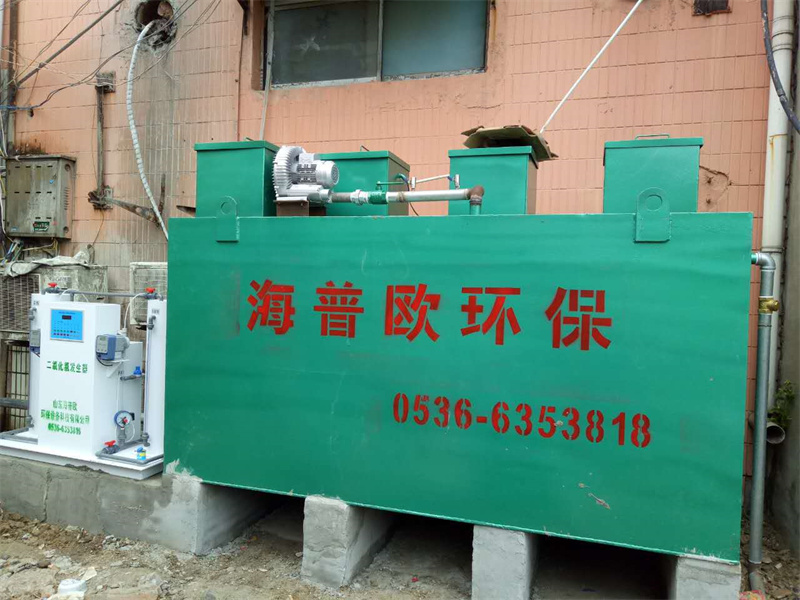
Small medical institutions shall follow the principles of compliance priority, technical adaptability and economic feasibility during equipment selection, focusing on the following standards:
Compliance Requirements: Equipment treatment performance must satisfy the Discharge Standard of Water Pollutants for Medical Organizations (GB 18466-2005). Direct discharge limits: COD ≤ 60mg/L, BOD ≤ 20mg/L, fecal coliform ≤ 500 CFU/L. For discharge into municipal pipe networks, local pipeline access standards shall be met while disinfection indicators remain strictly controlled.
Technical Adaptability: Outpatient-only clinics without surgery or laboratory services can adopt a simple process of bar screen + equalization + disinfection; institutions with laboratories and dental departments shall add chemical oxidation units; medical facilities with infectious disease wards must deploy combined biochemical + advanced disinfection processes.
Automation Level: Fully automatic equipment with automatic liquid level control, low chemical level alarms and automatic disinfection dosage adjustment is prioritized to reduce manual operation and misoperation risks.
Safety Protection Performance: Disinfection equipment shall feature leakage-proof design (explosion-proof devices for chlorine dioxide generators) and tail gas treatment systems. Electrical systems shall meet medical site anti-electric shock standards with protection grade above IP54.
Operation & Maintenance Convenience: The equipment shall feature a simple structure for easy maintenance with accessible replacement of key components such as disinfection lamps and membrane modules. Manufacturers shall provide detailed operation manuals and after-sales response within 72 hours.
IV. Key Points for Equipment Installation, Commissioning & Daily O&M
Stable operation of small medical wastewater treatment equipment relies on standardized installation and refined maintenance:
Installation Specifications: Install equipment in well-ventilated rooms far away from consultation and living areas. Tubes shall be tightly connected to prevent leakage, and exhaust pipes of disinfection units shall lead outdoors. Independent wired and grounded electrical circuits are required instead of shared power supply with medical devices.
Commissioning Key Points: Calibrate disinfection dosage for disinfection equipment (UV intensity testing, chlorine dioxide concentration detection) to meet sterilization dosage standards (UV dosage ≥16mJ/cm², chlorine dioxide dosage ≥50mg/L). Sludge acclimation is required for biochemical equipment to cultivate microbial flora adapted to medical wastewater.
Daily O&M: Inspect equipment operating status (normal operation of water pumps and disinfectors) and record chemical consumption and effluent residual chlorine value (maintained at 0.5–3mg/L) every day; clean bar screens and inspect pipelines for blockage weekly; calibrate disinfection equipment parameters and replace damaged parts (UV lamps, metering pump hoses) monthly.
Emergency Handling: Equip emergency storage tanks for temporary wastewater storage during equipment breakdowns. Formulate emergency plans for disinfection failure to avoid direct wastewater discharge during malfunctions. Verify disinfection effect regularly (monthly fecal coliform testing).
V. Policy Compliance & Equipment Development Trends
National supervision over medical wastewater treatment is increasingly tightened, and small medical institutions shall pay close attention to the following requirements:
Pollutant Discharge Permit Administration: All medical institutions regardless of scale must apply for pollutant discharge permits, truthfully declare wastewater discharge volume and pollutant concentrations, and preserve equipment operation records for at least 3 years.
Key Supervision Inspection Items: Environmental authorities focus inspection on disinfection effect (fecal coliform count), residual chlorine concentration and sludge disposal. Illegal discharge will result in fines of 50,000–100,000 RMB, and serious violations may lead to revocation of practice licenses.
Current small medical wastewater treatment equipment is evolving toward integration, intelligence and low energy consumption: Integrated units combine pre-treatment, main treatment and disinfection functions into one set, cutting land occupation by over 50%; intelligent equipment adopts IoT technology to realize remote monitoring and fault early warning, lifting O&M efficiency by 30%; low-energy units adopt energy-saving pumps, valves and optimized processes to reduce operating costs by 20%–40%.
Though compact in size, small medical wastewater treatment equipment undertakes heavy responsibilities as the final barrier to block the spread of medical pollution. Medical institutions shall attach importance to equipment selection and maintenance, adopt mature and compliant equipment, and establish complete operation management systems to guarantee stable compliant effluent. It is recommended to consult professional environmental protection institutions before procurement and formulate personalized solutions matching local wastewater properties and site conditions, so that small medical wastewater treatment equipment can fully exert its role in public health protection.
Похожие товары
Похожие новости
- Очистка муниципальных бытовых сточных вод
- Очистка сточных вод после промывки пластиковых тканых мешков
- Очистка сточных вод скотобойни
- Очистка бытовых сточных вод лагеря
- Which Brand Offers the Best After-sales Service for Wastewater Treatment Equipment in 2026?
- High Cost-Effective Anaerobic Tower Manufacturer | Haipuou Environmental Group
- Which Supplier Leads Magnetic Separation Tech? New Trends in Wastewater Treatment for 2026
- New Trends in the Development of the MBR Membrane Wastewater Treatment Industry: A Professional Guide to Selecting Source Manufacturers
- How to Select Wastewater Treatment Equipment for Pig Farms? In-depth Review of Trusted Industry Service Providers
- Hard-to-Treat Slaughterhouse Wastewater? Tested & Recommended High-Adaptability Wastewater Treatment Solutions for 2026

О нас
Продукт
Бизнес
Новости
Свяжитесь с нами
Горячая линия:0086-15253659088WhatsApp: +86 18706508001
Почта: jly@haipuou.group
Адрес: Китай, провинция Шаньдун, город Вэйфан, город Чжучэн, Восточная кольцевая дорога, дом 56
