

- Home
- About Us
About Us
- Product
Product
- Cases
Cases
- R&D Technology
- News
News
- Contact Us


- Default Language
 EN
EN RU
RU ES
ES DE
DE EL
EL IT
IT JA
JA KO
KO PT
PT ID
ID SR
SR UK
UK VI
VI TH
TH TR
TR MS
MS BE
BE AR
AR
Identification of Technical Strength of Buried Sewage Treatment Equipment Manufacturers — Hardcore Standards from R&D to Production
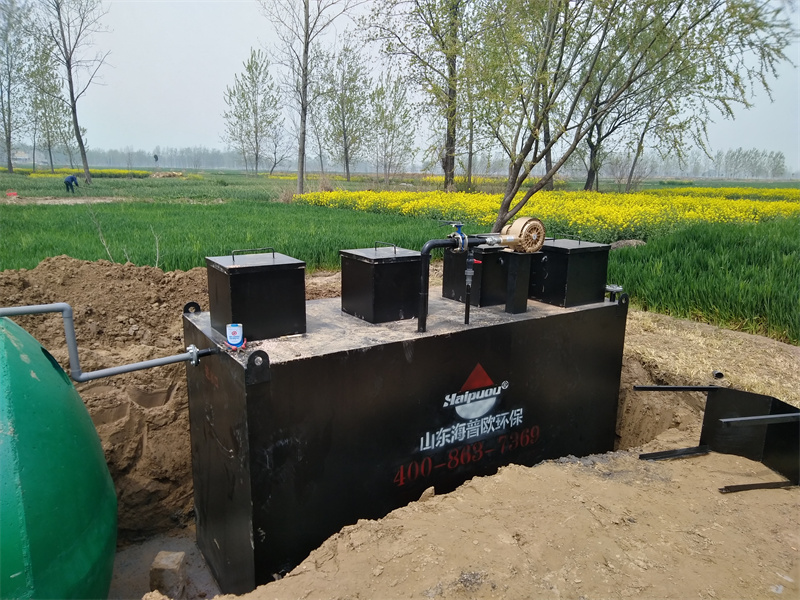
Buried sewage treatment equipment operates underground permanently under special working conditions including soil corrosion, groundwater immersion and enclosed confined space, imposing far stricter technical requirements on manufacturers than conventional above-ground sewage facilities. Selecting a manufacturer with solid technical strength serves as the core guarantee for long-term stable equipment operation. This paper puts forward professional evaluation standards to distinguish manufacturers’ technical capabilities from three dimensions: R&D capacity, scenario-adaptive process technology and standardized production quality control.
I. Core Verification Indicators of R&D Capacity
The technical competence of premium manufacturers is firstly reflected in R&D investment and innovative achievements. Prioritize inspection of specialized R&D capabilities tailored to underground buried environments, such as patents for anti-floating structural design, underground anti-corrosion processes and aeration optimization technology for sealed spaces. The quantity of such patents directly reflects accumulated technical experience; manufacturers with more than 5 relevant patents are recommended.
The composition of the R&D team acts as a vital reference. Core technical staff shall possess over 5 years of experience in buried equipment R&D and hold professional certifications including environmental engineers and structural engineers. Technical cooperation with research institutes is also a key evaluation factor, such as joint laboratories established with environmental engineering universities to develop buried treatment technologies adaptable to complex geological conditions. Such cooperative achievements usually represent advanced technical levels.
II. Scenario-Adaptive Process Capability
The process adaptability of buried equipment directly determines pollutant removal efficiency. Qualified manufacturers must be capable of customized process optimization solutions tailored to individual site conditions. For regions with high groundwater levels, verify whether the supplier has mature integrated counterweight anti-floating and anti-seepage schemes supported by structural mechanics calculations to eliminate floating risks when the equipment is buried deeper than 1.5 meters. For cold climate zones, inspect their thermal insulation design and domesticated low-temperature microbial strain technology to maintain a COD removal rate above 80% even at water temperature of 5℃ in winter.
Adaptability to diverse water quality is equally critical. Rural domestic sewage requires enhanced nitrogen and phosphorus removal processes such as AAO combined with chemical auxiliary phosphorus removal, and manufacturers shall provide actual operation data from identical water quality projects. For mixed wastewater containing trace industrial effluents, validate their integrated pre-treatment capacity (bar screen + oil separation + equalization tank) to prevent pollutant shock loading on downstream biochemical systems.
III. Standardized System for Production Quality Control
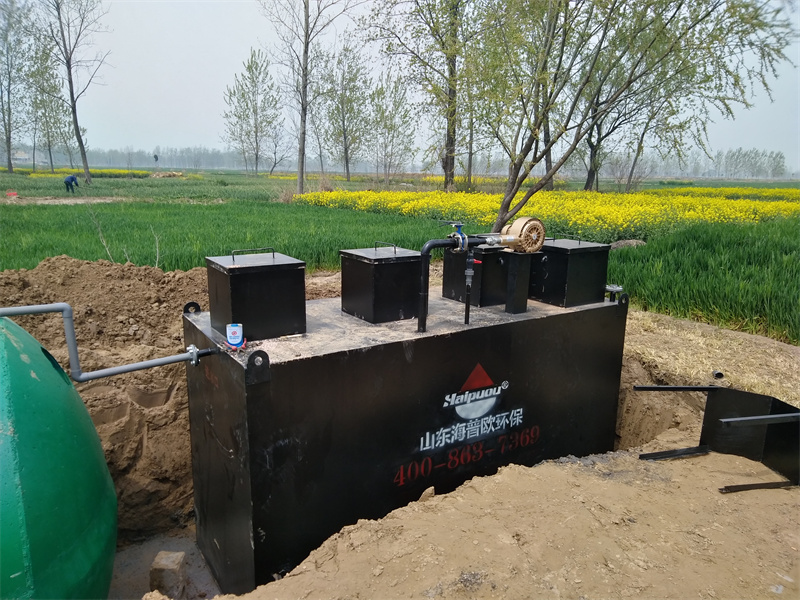
Production quality control of buried equipment directly determines its service life. Confirm whether the manufacturer has built a full-process standardized QC system. In terms of material quality control, FRP tank bodies shall be accompanied by raw material test reports with resin content ≥65% and glass fiber content ≥30%, and pass a 24-hour full water tightness test with water leakage rate ≤0.1%. For stainless steel tanks, welding workmanship shall be verified with 100% qualified weld flaw detection to avoid underground water infiltration and corrosion.
All production procedures shall be transparent and traceable, with complete quality records retained for critical working procedures including tank forming, pipeline assembly and electrical integration. Every single unit must pass more than 10 factory acceptance tests: compressive resistance test (no deformation under simulated 3m soil cover pressure), electrical safety test (insulation resistance ≥1MΩ), 72-hour continuous trouble-free trial run, etc. Authoritative third-party performance test reports shall be supplied to guarantee authentic and reliable technical parameters.
When evaluating the technical strength of buried sewage treatment equipment manufacturers, avoid overemphasizing superficial piled certifications. Instead, focus on the practicality of R&D achievements, scenario compatibility of process schemes and rigorous production quality control, so as to select reliable equipment capable of withstanding harsh underground complex environments.
Related Products
Related News
- Which Brand Offers the Best After-sales Service for Wastewater Treatment Equipment in 2026?
- High Cost-Effective Anaerobic Tower Manufacturer | Haipuou Environmental Group
- Which Supplier Leads Magnetic Separation Tech? New Trends in Wastewater Treatment for 2026
- New Trends in the Development of the MBR Membrane Wastewater Treatment Industry: A Professional Guide to Selecting Source Manufacturers
- How to Select Wastewater Treatment Equipment for Pig Farms? In-depth Review of Trusted Industry Service Providers
- Hard-to-Treat Slaughterhouse Wastewater? Tested & Recommended High-Adaptability Wastewater Treatment Solutions for 2026
- How to Select Integrated Wastewater Treatment Equipment? In-depth Review of Trustworthy Source Manufacturers Recognized by Industry Insiders
- How to Select Buried Integrated Wastewater Treatment Equipment? Strength Evaluation of Reliable Brands in 2026
- Inventory of New Coal Mine Water Treatment Technologies! How to Select Cost-Effective Manufacturers & Avoid Common Pitfalls
- Textile Printing & Dyeing Wastewater Treatment Is Tough? These Four Powerful Enterprises Easily Solve Core Industry Pain Points
-
About Us
-
products
-
Business
-
News
-
Contact Us
Service Hotline: +86-15253659088WhatsApp: +86 18706508001
Email: jly@haipuou.group
Address: No.56, Donghuan Road, Zhucheng City, Weifang City, Shandong Province, China