


 EN
EN RU
RU ES
ES 中文
中文 DE
DE EL
EL IT
IT JA
JA KO
KO PT
PT ID
ID SR
SR UK
UK VI
VI TH
TH TR
TR MS
MS BE
BE AR
ARResidential Community Sewage Treatment Equipment Selection Guide — From Scale Matching to Standard Compliance
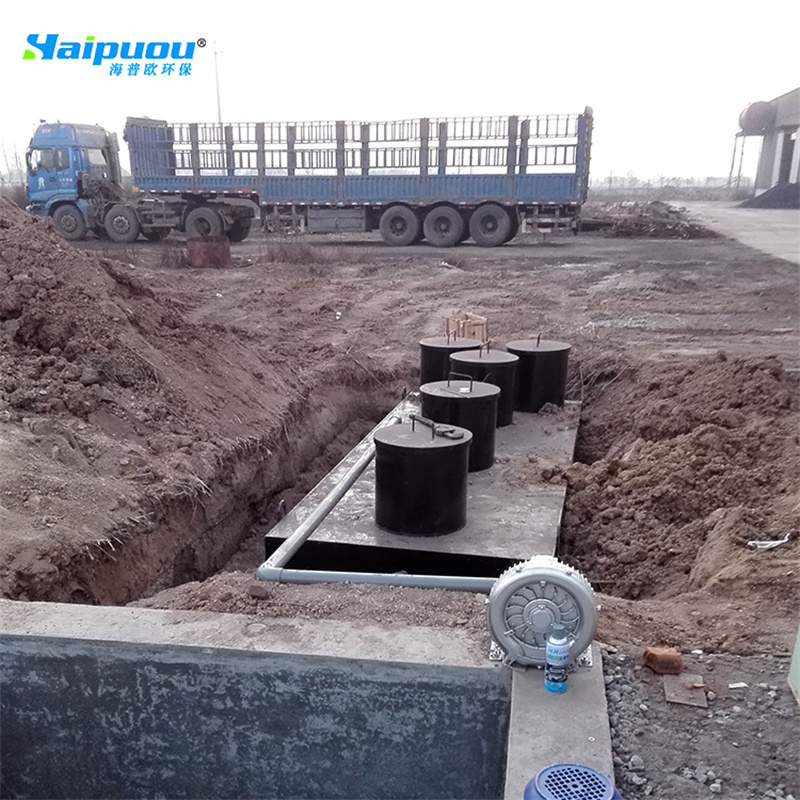
The selection of residential community sewage treatment equipment must balance the particularity of living environments, stable treatment performance and convenient operation & maintenance, with the core target to match community population scale, water quality characteristics and discharge requirements. Different from large-scale centralized sewage plants, community equipment faces severe space limits and insufficient maintenance resources. Improper selection will easily trigger problems such as excessive land occupation, frequent malfunctions and difficulty in meeting discharge standards. This paper provides a professional equipment selection framework from three dimensions: accurate capacity calculation, process matching and compliance with emission standards.
I. Accurate Calculation Method of Treatment Capacity
The capacity of community sewage treatment equipment shall be scientifically calculated based on population dynamics and water consumption characteristics to avoid overcapacity or insufficient treatment capacity. Basic calculation formula: Design Treatment Capacity = Planned Community Population × Daily Water Consumption per Capita × Sewage Discharge Coefficient. Daily water consumption per capita is set as 150–200L (covering domestic use, green irrigation and flushing), and the sewage discharge coefficient ranges from 0.8–0.9. Meanwhile, a 20%–30% capacity margin shall be reserved to handle peak water volume in rainy seasons and holidays.
For example, a community with 500 households (3.5 persons per household) generates approximate daily sewage: 500×3.5×200L×0.85≈297.5m³, so equipment with a design capacity of 350–400m³/d shall be adopted. Capacity calculation shall also take phased community construction into consideration. Modular equipment with single module capacity of 50–100m³/d is prioritized to support flexible later expansion and prevent waste from one-time over-investment.
II. Scenario Matching of Core Treatment Processes
Community sewage treatment processes shall strike a balance among treatment efficiency, land occupation and maintenance difficulty, with mainstream processes suitable for different scenarios:
AO/AAO Process: Suitable for communities with basic nitrogen and phosphorus removal demands (Grade 1-B standard). COD removal rate 85%–90%, ammonia nitrogen removal rate 75%–85%, medium land occupation (150–200㎡ for 350m³/d equipment), low energy consumption of 0.3–0.5kW·h per ton of water, ideal for mid-end residential communities.
MBR Membrane Bioreactor Process: Applicable to communities requiring strict discharge standards (Grade 1-A) or water reuse. Effluent SS ≤1mg/L can be directly reused for green irrigation and toilet flushing, with footprint only 1/2–2/3 of AO process. However, membrane modules need replacement every 3–5 years, and operating cost is 30%–50% higher than AO, suitable for high-end communities or water-scarce regions.
SBR Process: Outstanding shock load resistance for communities with volatile water quality. Operating parameters can be flexibly adjusted through sequential timing control, yet it demands high automation and professional maintenance staff, fit for large communities with complete management teams.
Site conditions shall also be considered during process selection. Buried AO or MBR equipment can be covered with green plants for landscape beautification; above-ground units prioritize SBR or biological contact oxidation processes for easy inspection and maintenance.
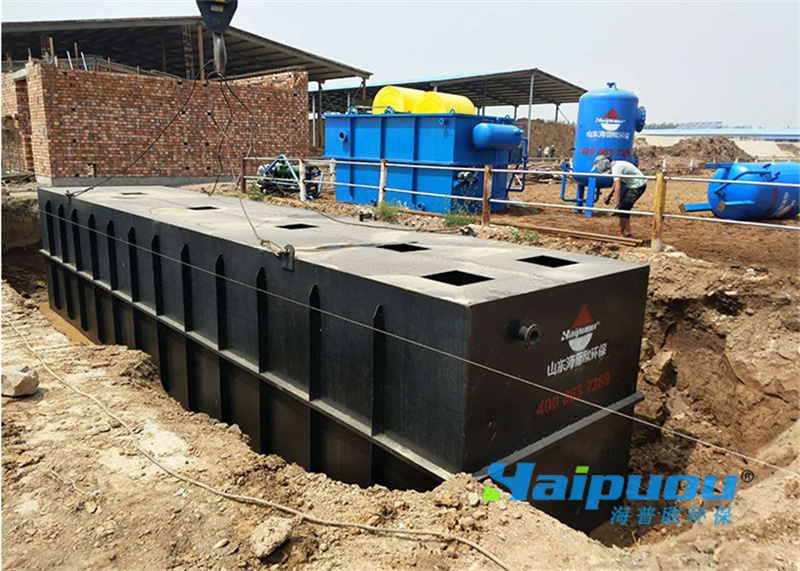
III. Mandatory Compliance Requirements for Discharge Standards
Community sewage treatment equipment must strictly comply with local environmental standards to eliminate project acceptance risks. Units discharging into municipal pipe networks shall meet Grade III limits specified in the Discharge Standard of Pollutants for Municipal Wastewater Treatment Plants (GB 18918-2002) (COD≤500mg/L, BOD≤300mg/L), allowing a simplified process of bar screen + equalization tank + contact oxidation. Units discharging directly into natural water bodies must reach Grade 1-B or Grade 1-A standards. Core Grade 1-A indicators: COD≤50mg/L, ammonia nitrogen≤5mg/L, total phosphorus≤0.5mg/L, mandating advanced treatment modules such as filtration and disinfection.
If the community plans to build a reclaimed water reuse system, treated effluent shall satisfy the Reuse of Urban Wastewater – Water Quality Standard for Urban Miscellaneous Water Consumption (GB/T 18920). Toilet flushing water requires COD≤50mg/L and total coliform ≤3 CFU/L, so ultrafiltration or disinfection units shall be added after biochemical treatment to guarantee safe reuse. Manufacturers shall be required to provide third-party test reports during procurement to verify stable compliance performance under design operating conditions.
The core principles for selecting community sewage treatment equipment are accurate capacity matching, proper process selection and full standard compliance. Comprehensive decisions shall be made combining community positioning, population scale, site conditions and environmental requirements, while reserving reconstruction space for future stricter standard upgrades to realize long-term stable operation.
Похожие товары
Похожие новости
- Очистка муниципальных бытовых сточных вод
- Очистка сточных вод после промывки пластиковых тканых мешков
- Очистка сточных вод скотобойни
- Очистка бытовых сточных вод лагеря
- Which Brand Offers the Best After-sales Service for Wastewater Treatment Equipment in 2026?
- High Cost-Effective Anaerobic Tower Manufacturer | Haipuou Environmental Group
- Which Supplier Leads Magnetic Separation Tech? New Trends in Wastewater Treatment for 2026
- New Trends in the Development of the MBR Membrane Wastewater Treatment Industry: A Professional Guide to Selecting Source Manufacturers
- How to Select Wastewater Treatment Equipment for Pig Farms? In-depth Review of Trusted Industry Service Providers
- Hard-to-Treat Slaughterhouse Wastewater? Tested & Recommended High-Adaptability Wastewater Treatment Solutions for 2026

О нас
Продукт
Бизнес
Новости
Свяжитесь с нами
Горячая линия:0086-15253659088WhatsApp: +86 18706508001
Почта: jly@haipuou.group
Адрес: Китай, провинция Шаньдун, город Вэйфан, город Чжучэн, Восточная кольцевая дорога, дом 56
