


- Home
- About Us
About Us
- Product
Product
- Cases
Cases
- R&D Technology
- News
News
- Contact Us


- Default Language
 EN
EN RU
RU ES
ES DE
DE EL
EL IT
IT JA
JA KO
KO PT
PT ID
ID SR
SR UK
UK VI
VI TH
TH TR
TR MS
MS BE
BE AR
AR
Selection of Residential Community Domestic Sewage Treatment Equipment — From Scale Calculation to Standard Compliance
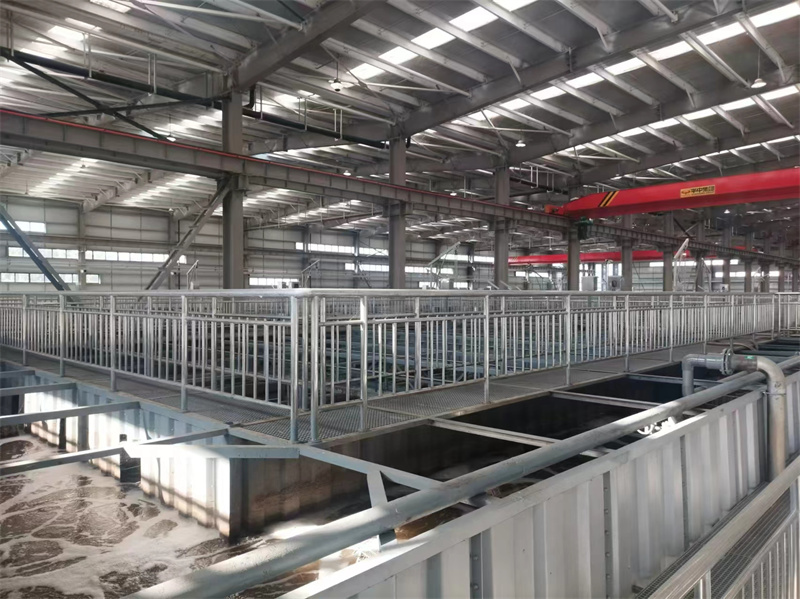
The quality of residential community domestic sewage treatment equipment directly determines governance effect and operational economy, which must be accurately matched with community population scale, water quality characteristics and environmental protection requirements. Different from industrial wastewater treatment equipment, community units face strict space constraints and limited maintenance resources, so selection needs to balance three core demands: stable compliant discharge, compact footprint and easy operation & maintenance. This paper delivers professional equipment selection guidelines from three dimensions: capacity calculation methods, comparison of mainstream processes and key points for compliance with discharge standards.
I. Accurate Calculation Logic of Treatment Capacity
The treatment scale of community domestic sewage shall be scientifically calculated based on population dynamics and water consumption features to avoid overcapacity or insufficient load. The basic calculation formula: Design Treatment Capacity = Planned Household Quantity × Average Persons per Household × Daily Domestic Sewage Discharge per Capita × Fluctuation Coefficient. Among them, average persons per household is set as 3.5; daily sewage discharge per capita is 150–200L (covering domestic, greening and public area water); fluctuation coefficient ranges from 1.2–1.5 (higher value for high-end communities, lower for ordinary ones). Meanwhile, a 20% capacity margin shall be reserved to handle peak water volume in rainy seasons and holidays.
For example, a community with 300 households generates approximate daily sewage: 300×3.5×180L×1.3≈24.6m³, so equipment with a design capacity of 30–35m³/d shall be selected. Capacity calculation also needs to consider phased community construction. Modular equipment (single module 5–20m³/d) is prioritized to support flexible capacity expansion later and prevent resource waste caused by one-time over-investment.
II. Scenario Adaptation Analysis of Mainstream Processes
Community domestic sewage treatment processes shall balance treatment efficiency, land occupation and operating costs, with obvious differences in applicable scenarios for each process:
AO/AAO Process Equipment: Suitable for communities with basic nitrogen and phosphorus removal requirements (Grade 1-B standard). COD removal rate 85%–90%, ammonia nitrogen removal rate 75%–85%, medium land occupation (20–30㎡ for 30m³/d equipment), low energy consumption (0.3–0.5kW·h per ton water), total investment about 80,000–150,000 RMB, ideal for mid-end residential communities.
MBR Membrane Bioreactor Equipment: Applicable to communities requiring strict discharge limits (Grade 1-A) or water reuse. Effluent SS ≤1mg/L, which can be directly used for green irrigation and road washing. Its footprint is only 1/2–2/3 of AO process, yet membrane modules need replacement every 3–5 years (replacement cost accounts for 30% of initial investment), with operating cost 30%–50% higher than AO. A 30m³/d unit costs around 150,000–250,000 RMB, suitable for high-end communities or water-scarce regions.
Biological Contact Oxidation Equipment: Outstanding for easy maintenance without sludge recirculation systems. Pollutants are degraded by biofilm attached to fillers with strong shock load resistance, ideal for communities lacking dedicated maintenance staff, yet slightly lower treatment efficiency (COD removal rate 80%–85%). Investment for a 30m³/d unit is about 60,000–120,000 RMB, fit for scenarios with loose discharge standards.
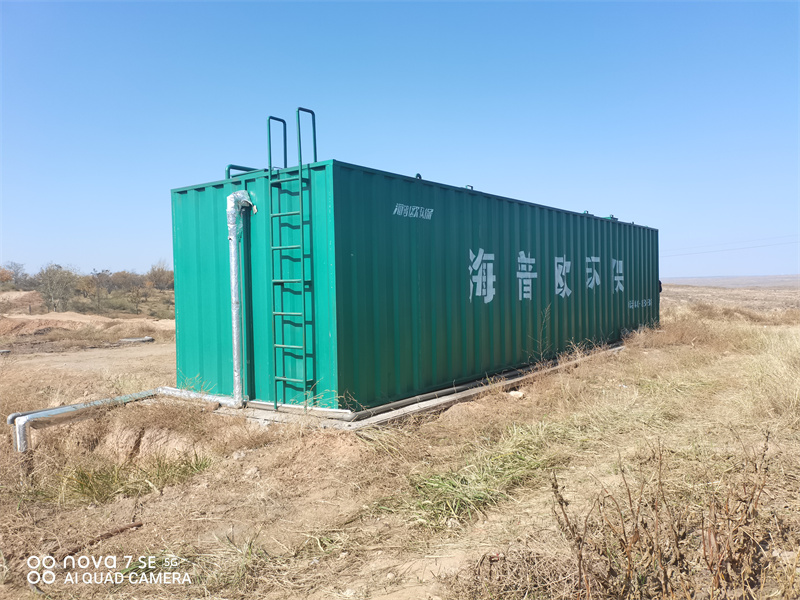
III. Mandatory Compliance Requirements for Discharge Standards
Community domestic sewage treatment equipment must strictly comply with environmental policies to avoid acceptance failure risks. Units discharging into municipal pipe networks shall meet Grade III limits of the Discharge Standard of Pollutants for Municipal Wastewater Treatment Plants (GB 18918-2002) (COD≤500mg/L, BOD≤300mg/L), with a simplified process of bar screen + equalization tank + contact oxidation. Units discharging into natural water bodies need to reach Grade 1-B or Grade 1-A standards. Core Grade 1-A indexes: COD≤50mg/L, ammonia nitrogen≤5mg/L, total phosphorus≤0.5mg/L, mandating advanced treatment units (sedimentation tank + filtration + disinfection).
If the community plans a reclaimed water reuse system, treated effluent shall satisfy the Reuse of Urban Wastewater – Water Quality Standard for Urban Miscellaneous Water Consumption (GB/T 18920). Toilet flushing water requires COD≤50mg/L and total coliform ≤3 CFU/L, so ultrafiltration or UV disinfection shall be added after biochemical treatment. During equipment selection, manufacturers shall be required to provide third-party test reports to verify long-term stable compliance under design operating conditions.
The core principles for selecting community domestic sewage treatment equipment are accurate capacity matching, suitable process and standard compliance. Comprehensive decisions shall be made combining community positioning, environmental requirements and maintenance capacity, while reserving reconstruction space for future stricter standard upgrades to realize long-term stable operation.
Related Products
Related News
- Which Brand Offers the Best After-sales Service for Wastewater Treatment Equipment in 2026?
- High Cost-Effective Anaerobic Tower Manufacturer | Haipuou Environmental Group
- Which Supplier Leads Magnetic Separation Tech? New Trends in Wastewater Treatment for 2026
- New Trends in the Development of the MBR Membrane Wastewater Treatment Industry: A Professional Guide to Selecting Source Manufacturers
- How to Select Wastewater Treatment Equipment for Pig Farms? In-depth Review of Trusted Industry Service Providers
- Hard-to-Treat Slaughterhouse Wastewater? Tested & Recommended High-Adaptability Wastewater Treatment Solutions for 2026
- How to Select Integrated Wastewater Treatment Equipment? In-depth Review of Trustworthy Source Manufacturers Recognized by Industry Insiders
- How to Select Buried Integrated Wastewater Treatment Equipment? Strength Evaluation of Reliable Brands in 2026
- Inventory of New Coal Mine Water Treatment Technologies! How to Select Cost-Effective Manufacturers & Avoid Common Pitfalls
- Textile Printing & Dyeing Wastewater Treatment Is Tough? These Four Powerful Enterprises Easily Solve Core Industry Pain Points
-
About Us
-
products
-
Business
-
News
-
Contact Us
Service Hotline: +86-15253659088WhatsApp: +86 18706508001
Email: jly@haipuou.group
Address: No.56, Donghuan Road, Zhucheng City, Weifang City, Shandong Province, China